Construction mistakes rarely start with bad intentions. Most begin with small layout assumptions that snowball into expensive re-work once construction is already underway. In San Diego, where inspections are strict and build sites are often tight, those mistakes move fast and cost even faster. That is exactly why a construction staking survey plays such a critical role before crews break ground.
Instead of fixing problems after the fact, construction staking helps prevent them altogether. It aligns plans, builders, and inspectors from day one, which keeps projects moving forward instead of backward.
Why Re-Work Is So Common on Active Build Sites
Re-work usually shows up after construction starts. Concrete gets poured. Framing begins. Utilities go in. Then an inspector flags an issue, or a crew realizes something does not line up.
At that point, the damage is already done. Crews must stop. Materials go to waste. Schedules slip. Budgets stretch.
These problems often happen even when plans are approved and designs look solid. The issue is not the plan. The issue is how that plan gets transferred onto the ground.
What Re-Work Looks Like in Real Projects
Re-work does not always mean a total rebuild. In many cases, it starts small and grows over time.
For example, a foundation may sit just inches outside the approved footprint. A footing may not line up with the civil plan. Framing may drift too close to a setback line. Utility trenches may cut through planned structural areas.
Each issue on its own may seem manageable. However, once inspections fail, those small errors trigger bigger corrections. Crews must remove work they already completed. Then they rebuild it again the right way.
This cycle drains time and money fast.
Why Approved Plans Do Not Guarantee Accurate Layout
Many property owners assume that approved plans prevent layout problems. In reality, plans only show intent. They do not mark exact locations in the field.
Plans include architectural drawings, engineering details, and civil layouts. Each set plays a role, but none of them physically controls where crews build. That step happens on-site.
Without a construction staking survey, builders often rely on tape measurements, reference points, or rough offsets from visible features. While that may seem efficient, it introduces guesswork into a process that demands precision.
Once that guesswork enters the build, re-work becomes far more likely.
How a Construction Staking Survey Changes the Process
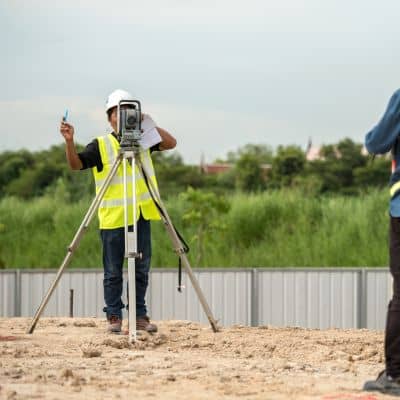
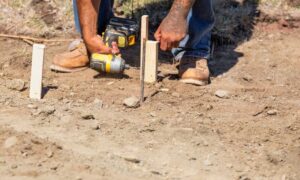
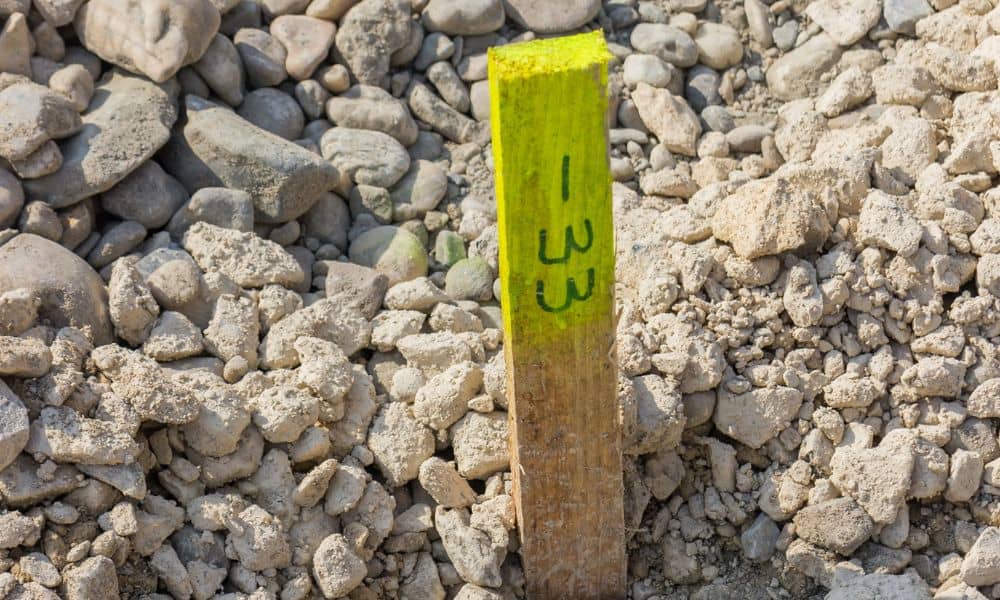
A construction staking survey turns approved plans into physical reference points on the site. Instead of guessing, crews receive clear markers that show exactly where to build.
Surveyors set layout points for building corners, footings, walls, utilities, and other key features. These points tie directly to the approved design and property boundaries.
Because of that, everyone works from the same reference. Builders know where to place forms. Inspectors see clear alignment with permits. Owners gain confidence that construction matches the approved plan.
As a result, errors drop sharply before they ever reach the inspection stage.
Why Re-Work Costs More Than Most People Expect
Re-work costs far more than just materials. Once a project pauses, other problems follow.
First, schedules fall apart. Trades must reschedule crews. Deliveries shift. Permit timelines reset.
Next, inspections must be repeated. Failed inspections often lead to re-submittals, added reviews, and longer approval waits.
Finally, disputes can arise. Builders, owners, and subcontractors may disagree on who caused the issue. That tension slows progress even more.
In comparison, the cost of a construction staking survey remains small and predictable. That is why many experienced builders treat it as insurance rather than an extra expense.
Why Rough Layout Causes So Many Problems
Some crews attempt to save time by laying out structures themselves. While this approach may seem practical, it often creates serious risk.
Contractor layout lacks legal accountability. It does not verify setbacks or property boundaries. It also does not carry the same authority during inspections.
Inspectors rely on survey control, not estimates. When rough layout conflicts with approved plans, corrections follow. That is when re-work becomes unavoidable.
A construction staking survey removes that uncertainty by providing a layout that meets professional and regulatory standards.
When Staking Needs to Be Updated to Prevent Re-Work
Staking is not always a one-time task. Build sites change as work progresses, and layouts must stay current.
For example, grading adjustments can shift elevations. Design revisions can alter building footprints. Long project delays can disturb existing stakes.
Because of that, surveyors often refresh staking before major phases such as concrete pours, vertical construction, or utility installation. These updates keep the project aligned as conditions change.
Without updates, crews may unknowingly build from outdated references, which leads straight back to re-work.
Why San Diego Inspections Leave Little Room for Error
Local inspections focus heavily on alignment with approved plans. Inspectors verify setbacks, building placement, and layout accuracy early and often.
On infill projects and additions, even minor deviations can trigger corrections. Inspectors do not accept visual estimates or informal measurements.
When a construction staking survey supports the layout, inspections move smoothly. When it does not, delays follow quickly.
Building It Right the First Time
Re-work is frustrating, expensive, and disruptive. Yet it remains one of the most common problems on active construction sites.
A construction staking survey helps stop those problems before they start. It replaces guesswork with clarity. It keeps crews aligned with plans. It supports inspections instead of slowing them down.
Most importantly, it allows projects to move forward with confidence. When construction begins on the right layout, it finishes faster, cleaner, and with fewer surprises.
In the end, building once always costs less than building twice.